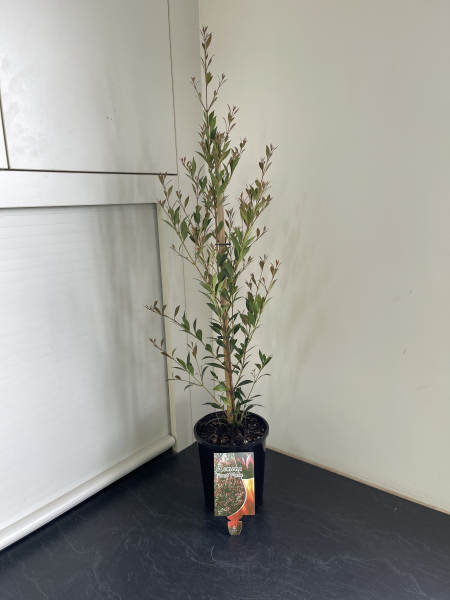


Melaleuca quinquenervia - Broad-leaved Paperbark
- Mature size: 10-20m tall x 5-10m wide.
- Recommended spacing: 5-10m apart.
- Ideal growing conditions: Full sun - part shade, tolerates waterlogged soils.
- Growth rate: Moderate - Fast.
Uses
Feature tree, shade tree, native garden, wetland planting, habitat planting, erosion control, windbreak, large street tree, coastal gardens, parklands and large landscapes.
Noteworthy
Australian native evergreen tree recognised for its distinctive papery bark and creamy bottlebrush-like flowers. Provides important habitat and nectar for birds, bees and other pollinators. A hardy and adaptable species commonly used in restoration planting and larger landscapes.
Tolerant
Wet soils, seasonal flooding, coastal conditions, humidity, heat, wind, drought once established and light frost. Adaptable to a wide range of soil types.
Colour/Growth form
Large evergreen tree with a broad canopy and layered white to cream papery bark. Features aromatic broad green leaves and fluffy cream flower spikes produced mainly during warmer months. Its capacity to thrive in waterlogged environments makes it invaluable for ecological restoration projects. The striking bark and abundant blooms are a favourite among local wildlife.
What is Melaleuca quinquenervia?
Melaleuca quinquenervia, commonly known as Broad-leaved Paperbark, is a hardy Australian native tree naturally found along waterways, wetlands and coastal regions. It is valued for its ornamental bark, wildlife benefits and ability to thrive in challenging conditions. Its soft bark texture and flowering display make it a standout feature in native landscapes and habitat gardens.
How to care for Broad-leaved Paperbark
Plant in a sunny to partly shaded position in moist or well-drained soil. Water regularly during establishment, particularly during dry periods, although mature plants become highly resilient. Apply mulch around the base to help retain moisture and suppress weeds. Prune lightly if shaping is required and fertilise occasionally during active growth if needed.